In my best practices books, I judge company initiatives by its innovation of design, customization and fit with your company strategy, and achievement of desired outcomes. The factors that affect your initiative’s effectiveness are based upon a six-stage process for developing a successful intervention or system that I follow for my Best Practices books.
And, it turns out, so did their CEO and bosses. The length of stay and performance of the practitioner depends on their ability to implement the following process.
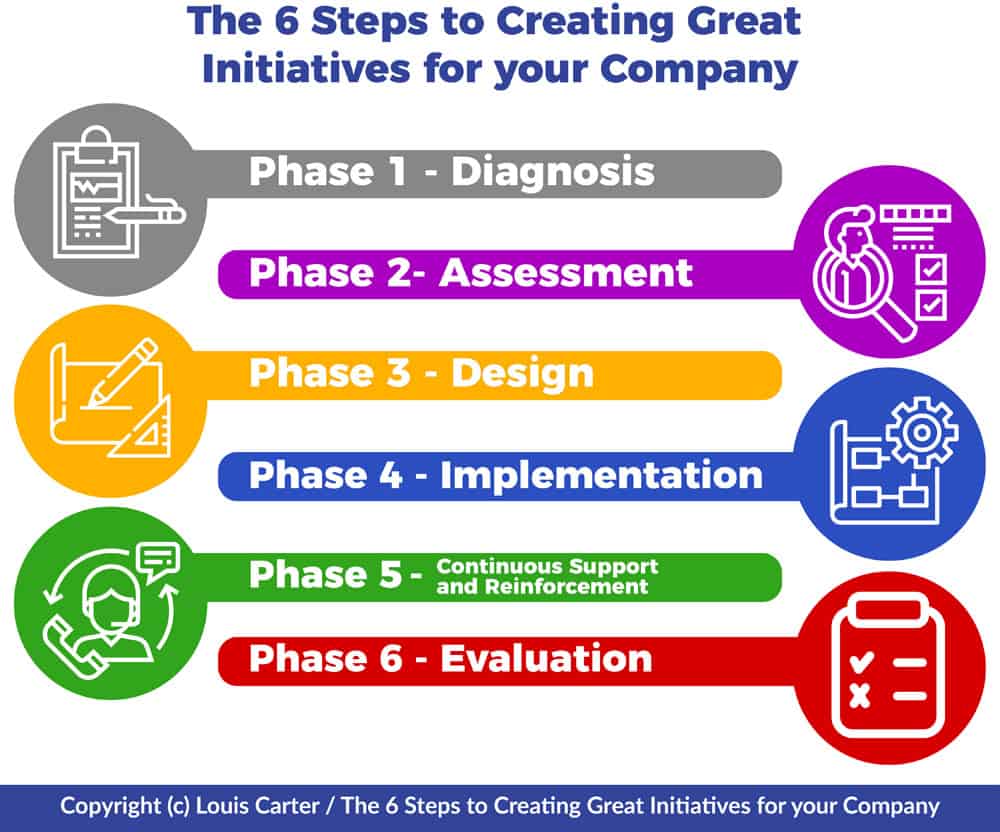
Phase One – Diagnosis
The first phase is a diagnostic step in which the business drivers and rationale for creating a system (e.g. leadership system) are identified. Critical to this stage is creating consensus and a sense of urgency regarding the need for leadership development. A future vision that is supported by management is key. All chapters will have some model as a focal point for their work. The best of these models capture the imagination and aspirations of the organization and its leaders.
What is the business problem/rationale for the initiative?
What are the stated objectives of the system/intervention?
What are the company’s current strengths to be leveraged for future success?
What are the “gaps” that must be bridged to avoid difficulty?
What new skills or competencies are needed to achieve the intent of new strategy?
Phase Two – Assessment
If appropriate, assessments are delivered to both individuals and to teams, resulting in development plans and actions. Assessment has become a norm for business—the question is how we use the assessment to drive change in our businesses and ourselves. Individual coaching often accompanies this assessment.
How was assessment used in your initiative?
Who participated in the assessment?
What type of instruments were used?
What feedback or coaching was provided?
What issues surfaced from the assessment data?
Did the assessment results drive the initiative design?
Phase Three – Design
Phase Three is the initiative design. This phase addresses the issue of how your intervention or system was designed to fit the business needs and objectives of the organization.
How did the needs assessment impact your system/intervention?
How did you customize the initiative features to fit the strategy of the business and meet the overall initiative objectives?
What were some of the critical success factors to designing your intervention/system?
Phase Four – Implementation
The fourth phase is initiative implementation. In this phase, you must identify the critical aspects of how the intervention/system was carried out. This stage should address the following questions:
What was the specific content of your training? (include training agenda)
What were the critical elements of your implementation?
What 2 or 3 features of your initiative had the most impact on participants?
What was it that made your initiative memorable and useful for participants?
How did you keep participants on-track?
What tools, instruments, or training material did you use to assist in the intervention? (include items in Exhibits)
What techniques or concepts did you use to address issues that arose during your intervention?
How does the team/group stay together as “learning groups” over time?
If you could choose 1 or 2 aspects of your initiative that distinguishes its success, what would they be?
Phase Five – Continuous Support and
The fifth phase is Support and Reinforcement. The best initiatives reach beyond the classroom and provide on-the-job reinforcement and support. Work in this phase is the follow-up support that determines whether the learnings of the initiative will transfer to the job.
What specific steps did you take to reinforce learning after the initiative?
What follow-up support was provided?
What connection did you make from one initiative to the next one offered?
How did you connect to other management or HR systems in the organization?
Phase Six – Evaluation
The sixth phase is Evaluation. Evaluation is the capstone—the point at which the organization can gain insights on how to revise and strengthen a initiative, eliminate barriers to its reinforcement and use in the field, and connect the intervention back to the original goals to measure success.
What evaluation methods did you leverage to measure the initiative’s effectiveness?
What measures of impact did you gather?
What anecdotal evidence (stories, etc…) supports the initiative’s success?
Beyond hard measures, did the initiative achieve:
Action Learning team breakthroughs
Business Impact
Breaking of Silos
Standardized operational elements
Senior leader support or sponsorship
Metric creation for workforce or succession planning