Each style of leadership has a specific focus area. For example, some forms of leadership, such as democratic leadership, emphasize people’s growth while others, like bureaucratic leadership, are focused on existing structures and hierarchies.
However, a charismatic leader can influence people in ways that other leaders can only dream of. This is why a charismatic leadership style is often regarded as the most powerful way to lead.
Here, I help you understand what makes charismatic leadership so powerful through an explanation of the leadership style, the characteristics that make it up, its pros and cons, and relevant examples.
What is a Charismatic Leadership Style?
It wouldn’t be wrong to assume that you’ve met at least one person in your life who oozed charisma. This almost unexplainable attribute is something that charismatic leaders have in abundance; they have a clear vision and can communicate it in an impactful way.
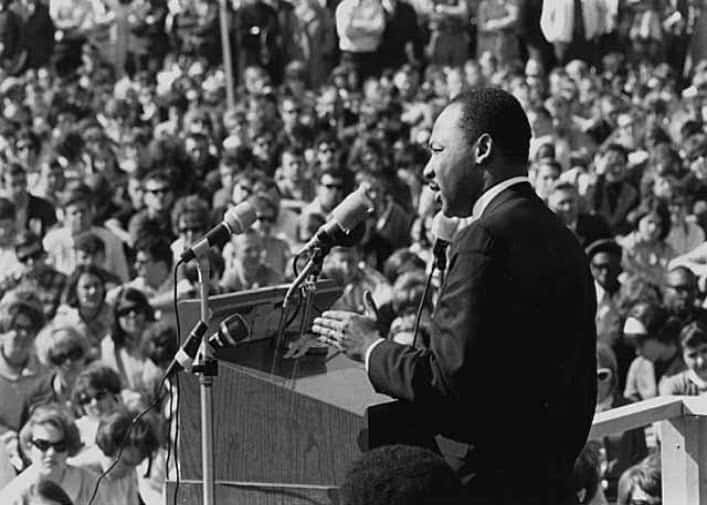
Charismatic leadership uses articulate communication, encouragement, and power of personality to motivate others to behave in a particular way. Charismatic leadership depends on the leader’s eloquence, their firm belief in their mission, and their ability to make their followers or subordinates feel the same way.
A study published in the International Journal of Psychology shows a strong relation between charismatic leadership and work-group identification of employees. The identification of the workgroup is often correlated with employees’ participation in the job, job satisfaction, success, and retention.
Charismatic leaders can encourage, inspire, and get individuals to achieve the mission at hand. No wonder many politicians and activists have been described as charismatic. Charismatic leadership relies, more than any other leadership style, on the personality of the leader.
Considering that they can connect with people at a subconscious level, charismatic leaders are most needed in organizations that are headed for disaster or are struggling to make progress. So, how can you identify such a leader in your organization? You can find a charismatic leader by looking for the attributes or characteristics that define this leadership style. The attributes or characteristics of a charismatic leader are discussed next.
The Characteristics of a Charismatic Leader
Charismatic leaders seem very unique. They stand out in a crowd and have a powerful effect on the people around them. More than that, they are exceptional at motivating other individuals. They also have a unique ability to analyze and decode any inefficiency within an organization.
Critical thinking, compiling of evidence, and discovery of ways to address a range of issues also emerge from these visionary characteristics related to this leadership style. The following are the characteristics that make charismatic leaders so powerful:
1. Superior Communication Abilities
Charismatic leaders have exceptional communication abilities. This helps inspire followers or subordinates during stressful times and helps them remain grounded when things are great. Communicating one-to-one or in a group environment is equally easy for these leaders.
2. Emotional Sensitivity and Control
You might find that most charismatic leaders can decipher the feelings of others well. This is natural for someone who is looking to inspire people using their ‘charm’. Charismatic leaders appear to display their feelings positively as well. Whenever required, they can demonstrate better control over their feelings.
3. Confidence
Charismatic leaders are genuinely optimistic people to state the obvious. They always look for the positive in things and are confident about themselves as a person. They are well aware of their traits and do not pretend to be someone else. Ultimately, this allows them to be comfortable in their skin and have a contagious confidence.
4. Visionary
Charismatic leaders envision an optimistic, often revolutionary version of the future in their minds. They will see what cannot be understood by their peers. The subordinates choose to follow the charismatic leader because of this characteristic, as they are promised a solution to a long-standing problem or something far better than what they currently have.
5. People-Centered Approach
The charismatic leadership style has a very people-centric focus. The ideas and activities of a charismatic leader are aimed at bringing about a change that will impact the people at a spiritual, political, or societal level. Additionally, these leaders can connect their followers to their mission extremely well.
6. Ability to Inspire Positive Behavior
Charismatic leaders display positive behavior and encourage others to follow suit. They inspire their followers through strong and inspiring words that convince them to transition to positive behaviors.
Perhaps, the best way to envision a charismatic leader with all these qualities is visualizing historical leaders with a charismatic leadership style. In the political, corporate, and religious realms, history is full of examples of charismatic leaders.
However, the most prominent amongst them is Martin Luther King Jr. His iconic speech ‘I have a dream’ still lives in people’s minds. He is known and celebrated across the globe for his telling role in U.S civil rights movement that changed the U.S for the better; he inspired this change through his words and charisma.
The Pros and Cons of Being a Charismatic Leader
Charismatic leaders may affect an organization and the individuals they lead in a strong, positive way. However, this leadership style can also lead to dangerous situations if used in the wrong manner. The following are the pros and cons of a charismatic leadership style.
Pros
Extremely motivating and encouraging
Fosters a sense of friendship, cooperation, and community
Makes subordinates r followers feel noticed and appreciated
Builds momentum for sustainable change
Cons
Can cause leaders to concentrate on themselves rather than their followers
Can encourage self-centered behaviors
Often seen as superficial or presumptuous
Final Word
Because charismatic leaders are willing to take chances and venture beyond the lines, they can have a positive influence on an organization or community. Unfortunately, a charismatic leader does not need to comply with a clear moral or ethical vision.
History has taught us that when working towards their vision, charismatic leaders can steer followers in the wrong direction and cause chaos. Nonetheless, this style of leadership can be a powerful way to inspire individuals and change the way an organization or community functions.