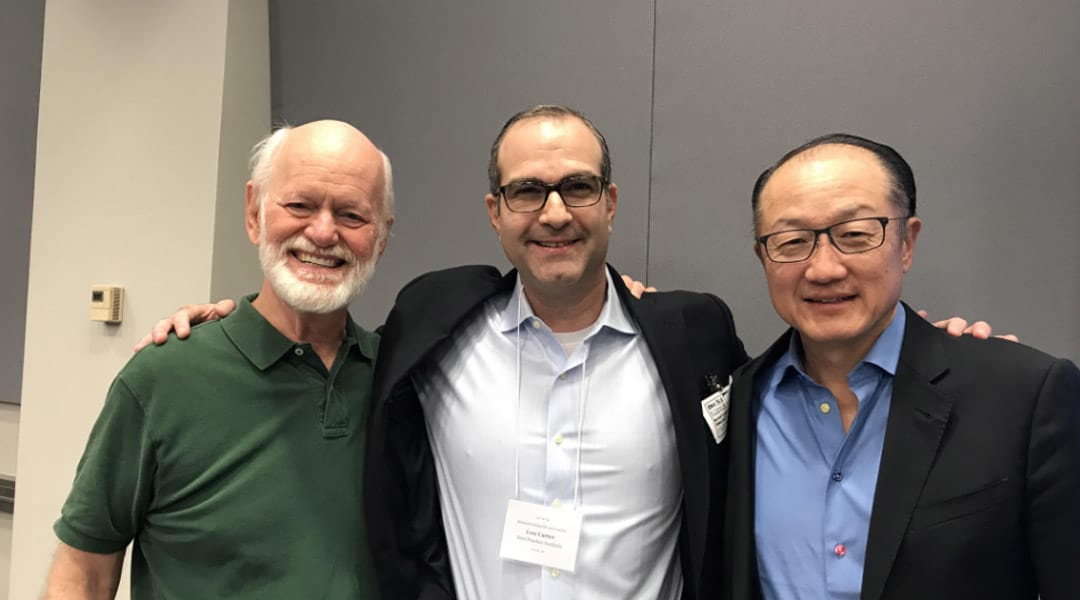
Meeting at The World Bank

Ending world poverty through investment in infrastructure and emerging market development is an incredibly powerful talent strategy backed by sound Macro and Microeconomic theory for long term growth. Its implications for the growth of global organizations who are already present in emerging markets or have plans to enter into new emerging markets are clear in […]

meeting at the world bank louis carter

Is your company a Most Loved Workplace®?

Join 1,000+ certified organizations worldwide

Ending world poverty through investment in infrastructure and emerging market development is an incredibly powerful talent strategy backed by sound Macro and Microeconomic theory for long term growth.

Its implications for the growth of global organizations who are already present in emerging markets or have plans to enter into new emerging markets are clear in that it sets the stage for prosperity for all parties. The systemic effect of such a goal allows for the development and financial gain of all parties necessary for the long term success of the investing organization – the shared prosperity of consumers, organizations, and employees.

Implications of ending poverty and boosting shared prosperity in emerging markets and its positive gains for practices around talent alignment, talent acquisition/attraction, consumer growth, organization culture transformation, and many more talent management outcomes have become abundantly clear to me from our MG 100 Coaches meeting at the World Bank.

It was an honor to dialogue with The President of the World Bank Jim Kim, Dr. Marshall Goldsmith and my fellow MG 100 Coaches about the amazing work of the World Bank in ending world poverty during our meeting at The World Bank this past Saturday.

Ready to Build a Loved Workplace?

Take the first step — check your organization’s CertCheck score or apply for certification today.

Frequently Asked Questions

The biggest large employer culture challenges during a spinout or major transformation include: maintaining consistent culture signals across geographically dispersed teams, preventing a vacuum of identity when the legacy brand disappears, and preserving the informal trust networks that made the old organization function. Companies like Kyndryl, which spun out of IBM with 73,000 employees across 5 continents, show that culture infrastructure—systematic onboarding, explicit values, leadership accessibility—must be deliberately built, not assumed to transfer.

Maintaining consistent culture across global offices requires moving from aspirational values to operational infrastructure. The evidence from Kyndryl's Most Loved Workplace certification shows that when employees in Asia Pacific, Europe, North America, South America, and the UK independently describe their culture using the same language—'flexible work,' 'you are heard,' 'career and learning outcomes'—it is not coincidence. It is the result of systematic design: shared onboarding, visible leadership behavior, and consistent feedback loops that translate values into daily experience regardless of location or time zone.

A Most Loved Workplace® certification proves that a company's culture claims are independently verified through employee assessment—not self-reported surveys or marketing copy. The certification uses machine learning to analyze sentiment, emotion, and recurring themes across thousands of employee responses. When a large employer like Kyndryl earns this certification despite a major transformation, it demonstrates that their culture infrastructure survived and scaled through disruption, which is the hardest test any organizational culture can face.

Get Certified?

Join 1,000+ Most Loved Workplaces®

In this Article

What's Next ?

Start your certification journey

Book a Call

Discuss your culture challenges with the Louis Carter team

Continue Reading