I’ve spent decades studying leadership. What makes loved leaders different from merely competent executives? What creates cultures where people stay 20+ years instead of job-hopping every two?
Recently, I came across a CEO whose story clarifies something I’ve long suspected but struggled to articulate.
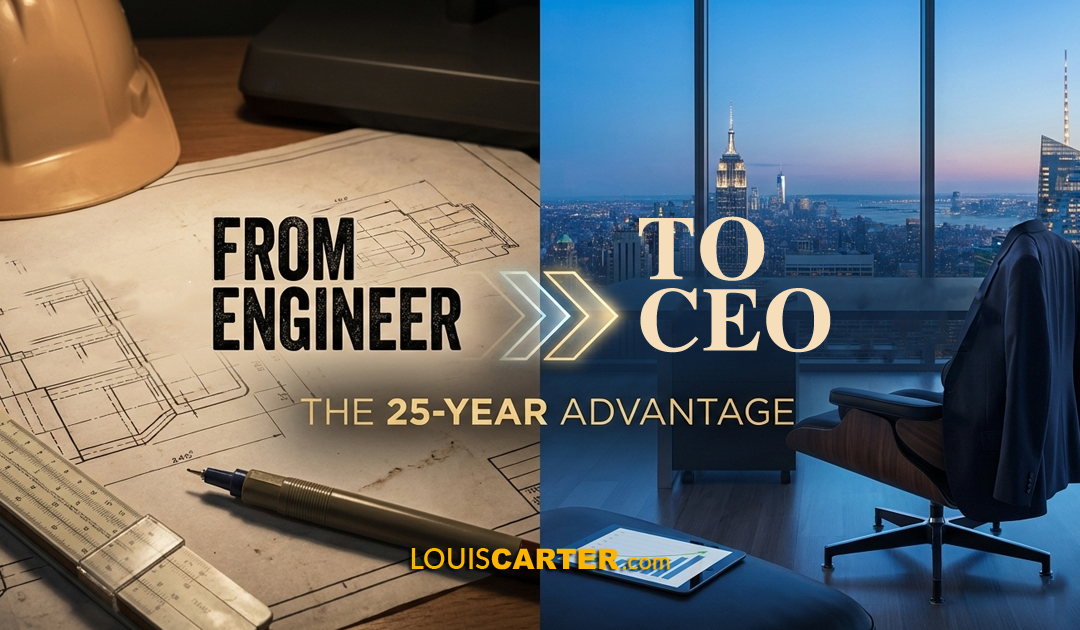
Sassine Ghazi started at Synopsys as an applications engineer in 1998. Twenty-six years later, he’s the CEO.
In an industry where CEO tenure averages 4-5 years and employees leave every 2-3 years, that’s notable.
But here’s what fascinates me: This isn’t a story about climbing a ladder. It’s about what long tenure enables that you can’t fake.
The 25-Year CEO: What Institutional Memory Creates
When Ghazi became Synopsys’s CEO in January 2024, he’d already spent 26 years at the company.
He’d been:
- An applications engineer (1998-2011) – understanding the product from the ground up
- VP of North America Sales (2011-2016) – learning customer relationships and market realities
- Co-GM then GM of Design Group (2016-2020) – leading the company’s largest business unit
- COO and President (2020-2024) – overseeing operations, sales, and strategy
By the time he took the CEO role, he’d lived every layer of the organization.
Compare that to the typical tech CEO path: hired from outside, parachuted into leadership, expected to “transform” culture they’ve never experienced.
Ghazi can’t be performative about Synopsys’s values. He lived them for 26 years.
He knows what bad management feels like – because he received it early in his career.
He knows what employees need – because he was one for two decades before becoming COO.
He knows which cultural initiatives are theater vs. which ones work – because he saw them tested over decades.
Authenticity isn’t a strategy you can deploy. It’s what happens when you can’t fake it anymore.
According to employee ratings on Comparably, Ghazi has an 86/100 CEO approval rating from 1,779 employee reviews. That places Synopsys in the top 5% of similar-size companies.
But here’s what strikes me: Employees aren’t rating a charismatic outsider who talks a good game. They’re rating someone who spent 26 years proving he means what he says.
That’s the difference.
The Innovation Infrastructure: Systematic, Not Inspirational
Synopsys operates in the semiconductor design automation space – deeply technical, incredibly complex.
Their culture of innovation isn’t about ping pong tables or “think different” posters.
It’s engineered. Systematic. Repeatable.
Here’s what they do:
Pitch Fest
Employees pitch ideas directly to leadership. Not suggestions in a box. Not filtered through six layers of management.
You have an idea for improving a product, streamlining a process, or solving a customer problem? You pitch it.
If it’s good, it gets resourced.
This isn’t innovation theater. It’s a systematic process for surfacing truth from people closest to the work.
InnoDay
An annual showcase where teams demonstrate projects they’ve been working on – many launched through Pitch Fest or other innovation programs.
Think of it as internal venture showcase. Engineers, product teams, and cross-functional groups show what they built.
Leadership evaluates. Some become core product features. Some inform strategy. Some get shelved – but the learning remains.
Job Rotations
Synopsys systematically rotates employees across functions.
Why?
Because when an engineer spends time in customer success, they understand pain points viscerally.
When a sales leader understands the R&D process, they sell differently.
When product teams rotate through operations, they build with real constraints in mind.
This creates what I call systemic innovation – not dependent on one visionary leader, but embedded in how the company operates.
ACE Recognition
Synopsys’s values are Agility, Courage, Excellence, and Trust.
The ACE recognition program isn’t HR checking boxes. It’s peers nominating peers who exemplified these values in specific situations.
Why does this matter?
Because values only exist when they guide actual decisions. If “courage” is a poster on the wall but nobody gets recognized for challenging a bad idea in a meeting, it’s performative.
At Synopsys, employees describe a culture where questioning assumptions is expected – not career-limiting.
That doesn’t happen by accident. It happens when systems reinforce behaviors over years.
The Values That Actually Guide Decisions
Let me be direct: Every company has values.
Most are meaningless.
“Innovation. Integrity. Teamwork.” Generic. Unactionable. Wallpaper.
Synopsys’s values – Agility, Courage, Excellence, Trust – are operationalized through specific programs:
Agility:
Job rotations force adaptability. You can’t stay in your lane for 20 years.
Courage:
Pitch Fest requires courage – pitching ideas to leadership knowing some will fail.
InnoDay showcases require courage – demonstrating unfinished work publicly.
Excellence:
Academic partnerships, R&D investment (heavy in semiconductor EDA), continuous learning infrastructure.
You don’t lead in 9 top-10 national specialties without systematic pursuit of excellence.
Trust:
Fair Pay Workplace certification (more on this in our separate analysis of Synopsys’s pay equity approach).
Transparent communication. Employee tenure averaging 4.8 years when industry averages 2-3 years.
Here’s what I’ve learned: Values matter only when they’re expensive.
If living your values costs nothing – no trade-offs, no hard decisions, no resources allocated – they’re decorative.
Synopsys invests in Fair Pay certification. That’s expensive (external audits, pay adjustments, ongoing compliance).
They fund Pitch Fest and InnoDay. That’s expensive (leadership time, R&D resources, potential failed experiments).
They rotate high-performers across functions. That’s expensive (short-term productivity dips, training costs, knowledge transfer overhead).
But expensive values create trust. And trust creates tenure.
Which brings me to the outcome that matters most.
The Outcome: People Stay
The average tenure in tech is 2-3 years.
At Synopsys, it’s 4.8 years.
That might not sound dramatic. But compounded over a company of 19,000+ employees, it’s transformative.
Here’s why tenure matters:
- Institutional knowledge doesn’t walk out the door every 24 months.
When engineers stay 5-10 years, they understand why past decisions were made. They don’t reinvent wheels. They build on existing foundations. - Trust accumulates over time.
You can’t fake relationships. The engineer who’s been at Synopsys 8 years trusts leadership differently than someone 8 months in. - Cultural consistency becomes self-reinforcing.
When the majority of your workforce has been there 3+ years, new hires learn culture from peers, not HR presentations. - Innovation compounds.
Pitch Fest works because people stay long enough to see their ideas implemented, refined, and scaled.
According to Synopsys employee reviews, phrases like “alignment between values and reality” and “people genuinely stay here” appear repeatedly.
That’s not compensation talking. Synopsys pays well, but so do their competitors.
People stay when the promises made during recruiting match the reality they experience daily.
And you can’t maintain that alignment without leadership who lived it themselves.
Which brings me back to Ghazi.
The Support You Don’t See
Most companies tout benefits. Synopsys has the usual: competitive comp, health insurance, 401(k), PTO.
But here’s what I find interesting – the benefits designed for life complexity, not just employment perks:
Student Loan Assistance:
Many tech workers carry significant student debt from engineering degrees. Synopsys helps pay it down.
Why does this matter for culture?
Because financial stress kills focus. When employees aren’t drowning in debt, they bring more cognitive capacity to innovation.
Cancer Care Concierge:
When an employee or family member faces cancer, Synopsys provides concierge navigation services.
This isn’t about healthcare cost savings. It’s about recognizing that people’s best work comes when they’re not paralyzed by medical bureaucracy during crises.
Caregiving Support:
Programs for employees managing aging parents, children with special needs, or other caregiving responsibilities.
Again – this isn’t standard. Most companies offer FMLA (legally required). Synopsys goes further.
Fair Pay Certification:
External validation of pay equity across gender, race, and other dimensions.
Why pay for third-party audits when you could just claim fairness?
Because external validation builds trust in ways internal promises never can.
As I discuss in my work on building trust within teams, transparency beats rhetoric every time.
These aren’t perks. They’re infrastructure for humans to do their best work over long tenures.
And they reflect a leadership philosophy that understands: sustainable high performance requires sustainable human support.
What I Learned: Systematic Culture vs. Performative Culture
Here’s the pattern I see:
Performative Culture:
- Hired CEO brings “transformation”
- Values announced with fanfare
- Initiatives launched, measured by activity (# of town halls, # of training sessions)
- Results: Cynicism grows, tenure shrinks, talent leaves
Systematic Culture (Synopsys model):
- CEO rose through ranks over decades
- Values embedded in programs with budget, accountability, measurement
- Initiatives designed for repeatability, not inspiration
- Results: Trust accumulates, tenure extends, talent stays
The difference isn’t inspiration. It’s infrastructure.
Ghazi didn’t “transform” Synopsys culture when he became CEO. He’s been building it for 26 years.
Pitch Fest wasn’t a new CEO initiative. It evolved from years of experimentation with employee voice.
Fair Pay certification wasn’t a response to external pressure. It’s operationalizing the “Trust” value they’ve held for years.
This is what I learned from a CEO who started as an engineer 25 years ago:
Consistency between stated values and actual practices matters infinitely more than eloquent mission statements.
And you can’t fake consistency. You build it over decades.
Worth Noting: They’re Hiring
Synopsys, like many Certified Most Loved Workplaces, is actively hiring across engineering, sales, product, and operations roles.
If you’re in semiconductor, EDA, or software – and you value systematic innovation over performance theater – it’s worth exploring.
But I’m not writing this as a recruitment pitch.
I’m writing because Ghazi’s 26-year journey from engineer to CEO crystallizes something every leader should understand:
The best cultures aren’t built by charismatic outsiders with 90-day plans.
They’re built by people who stayed long enough to know what actually works.
And in an era where “disruption” is worshiped and tenure is seen as stagnation, that’s a lesson worth remembering.
Frequently Asked Questions
Why does CEO tenure matter for company culture?
CEO tenure creates cultural authenticity that can’t be faked. When a CEO like Sassine Ghazi spends 26 years at a company before taking the top role, they’ve lived every layer of the organization. They know what bad management feels like, what employees actually need, and which cultural initiatives work versus which are theater. This lived experience creates alignment between stated values and actual practices – which employees notice. Synopsys’s 4.8-year average employee tenure (vs. 2-3 year industry average) reflects this authenticity.
What makes Synopsys culture different from other tech companies?
Synopsys built systematic infrastructure for innovation and values, not performative programs. Their Pitch Fest lets employees pitch ideas directly to leadership. InnoDay showcases internal innovations. Job rotations move people across functions to build cross-functional understanding. ACE recognition reinforces their values (Agility, Courage, Excellence, Trust) through peer nomination. Fair Pay Workplace certification provides external validation of pay equity. These aren’t HR initiatives – they’re engineered systems that compound over time, much like their semiconductor design automation products.
How long do employees stay at Synopsys compared to industry average?
Synopsys employees average 4.8 years of tenure, compared to the tech industry average of 2-3 years. This longer tenure creates compounding benefits: institutional knowledge doesn’t walk out the door every 24 months, trust accumulates over time, cultural consistency becomes self-reinforcing, and innovation compounds as people stay long enough to see their ideas (like those from Pitch Fest) implemented and scaled. Employee reviews frequently mention “alignment between values and reality” and people “genuinely staying here” – indicators that recruiting promises match daily experience.
What is Synopsys’s approach to innovation and employee ideas?
Synopsys uses systematic programs to surface and implement employee innovations. Pitch Fest allows employees to pitch ideas directly to leadership – if the idea is good, it gets resourced. InnoDay is an annual showcase where teams demonstrate projects they’ve been working on, functioning like an internal venture showcase. Job rotations move employees across functions so engineers understand customer pain points and sales teams understand R&D constraints. This creates what leadership experts call “systemic innovation” – not dependent on one visionary leader, but embedded in repeatable processes that work across the organization’s 19,000+ employees.