Introduction
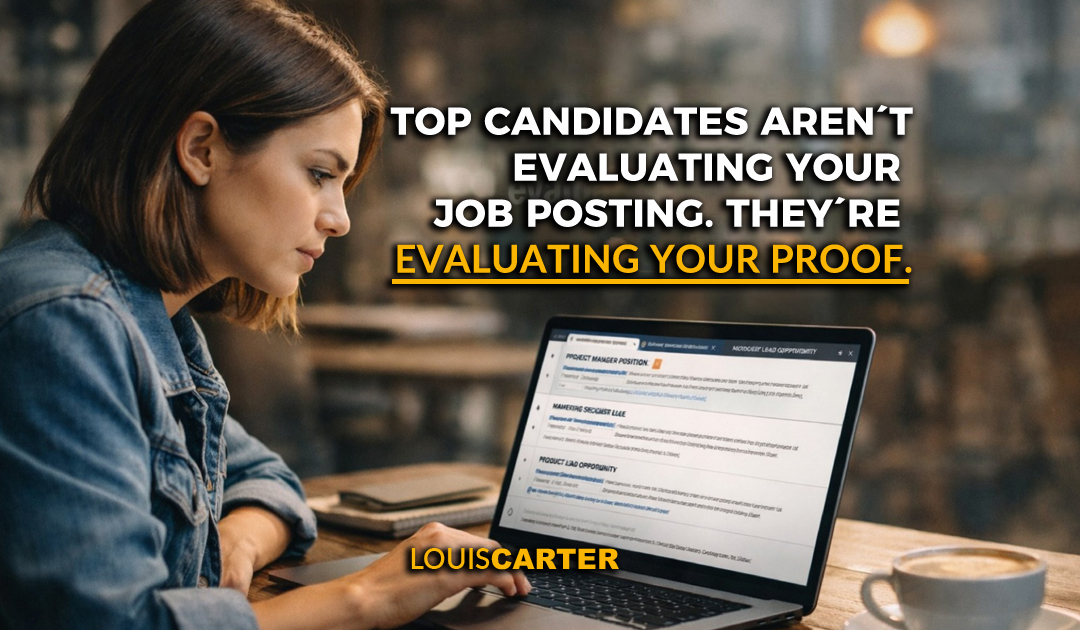
Here is what most hiring teams get wrong about recruiting: they think the job posting is where candidates make decisions.
It is not.
The research is unambiguous. 95% of candidates research a company before they apply. When they find a job posting that looks interesting, they do not hit apply immediately. They research first.
The job posting is not the beginning of the decision. It is the end.
What Candidates Actually Do
When a strong candidate sees a job posting that looks interesting, they do not immediately apply. They research.
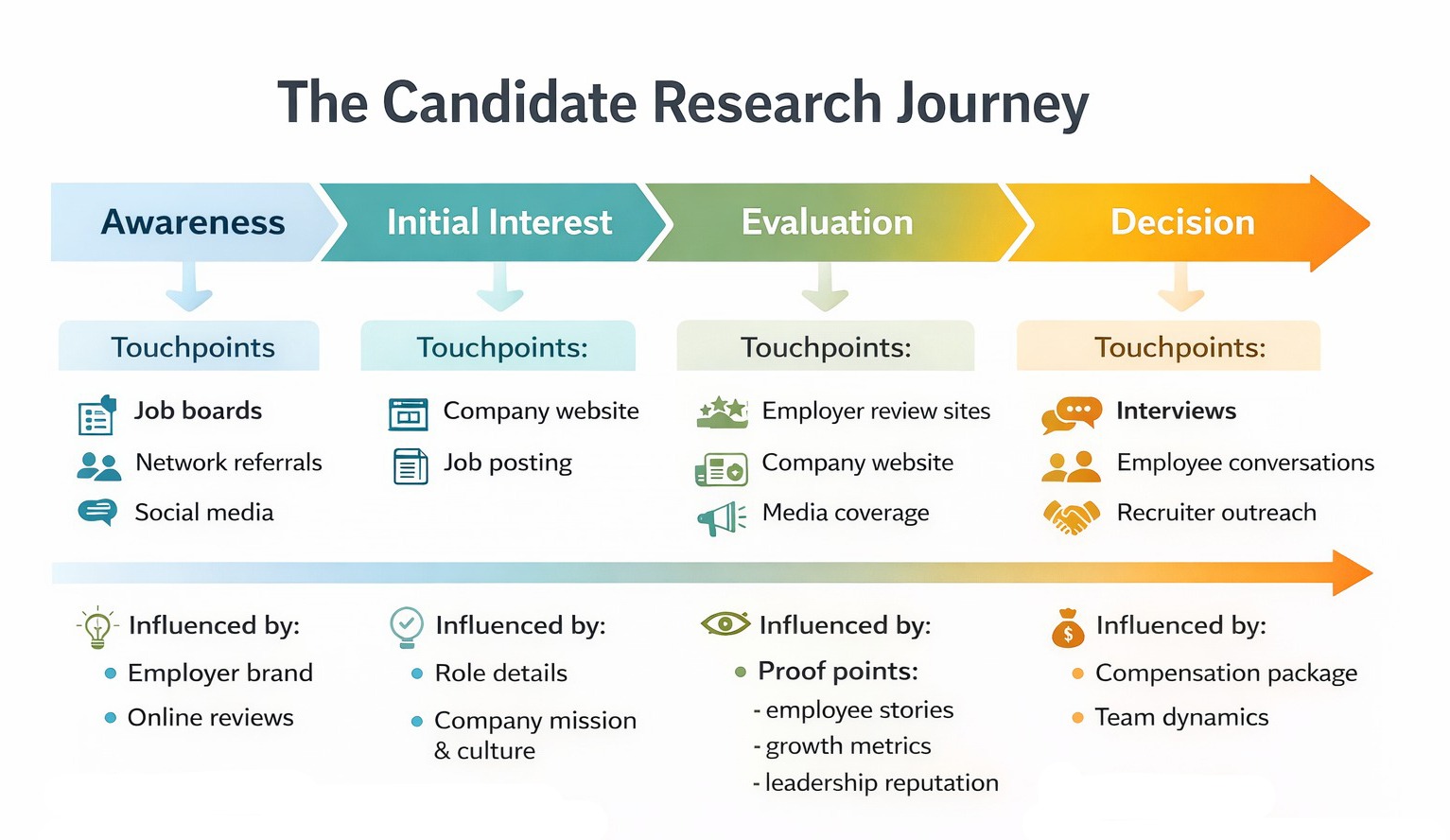
They Google your company name. They check Glassdoor. They look at your LinkedIn. They scroll through your recent posts. They might ask people in their network. In an era of radical authenticity, where candidates research companies through multiple channels before applying, employer brand is not a marketing exercise. It is a competitive necessity.
And here is what matters: they are not looking for information about the role. They are looking for proof about the company.
Do people seem happy working there? Is leadership trustworthy? Does the culture seem genuine or performative? Is this actually a place I want to spend 40+ hours a week?
These questions get answered in the first five minutes of research. Long before they read your benefits package or carefully crafted job description.
The Proof Problem
Here is the challenge: Every company claims a loved culture. Every careers page says “we value our people.” Every LinkedIn post talks about “exciting opportunities.”
These claims are noise. Candidates have learned to tune them out.
What candidates look for instead: proof. Third party validation. Employee voices that do not sound like marketing copy. Recognition from sources they trust. Signals that are hard to fake.
71% of job seekers will not apply to a company that lacks a strong employer brand. And 69% will reject an offer from a company with a negative employer brand, even if they need the work. Even if they are unemployed.
This is not about whether you have good culture. It is about whether candidates can verify you have good culture.
Why Third Party Validation Changes Behavior
I have spent 25 years studying what makes organizations work. And one pattern holds across industries, company sizes, and market conditions: People trust what they can verify more than what they are told.
This is why certification matters. It is not the badge itself. It is what the badge represents: An independent organization measured this company and verified their claims.
That is the difference between claiming you are a loved workplace and proving it.
The Signals That Actually Work
Based on my research across hundreds of organizations, here is what candidates actually respond to:
Certification badges visible on careers pages and job postings. Not because the badge itself is magic, but because it signals independent verification.
Employee voices that sound authentic. Not corporate testimonials. Real people sharing real experiences.
Media coverage that candidates encounter during research. When The Wall Street Journal or Newsweek features your company as a top workplace, that shows up in Google results.
Consistent signals across touchpoints. If your LinkedIn says one thing and Glassdoor says another, candidates notice the disconnect.
Leadership visibility. 82% of employees will research a CEO’s online presence when considering whether to join. Faceless corporate brands have a harder time building trust.
What CHROs Who Get This Right Do Differently
The HR leaders who win the talent competition understand something fundamental: Employer brand is not a communications problem. It is a proof problem.
They do not just collect employee feedback. They act on it and then make that action visible.
They do not just improve culture. They pursue independent validation that proves the improvement.
They do not just post job listings. They ensure candidates who research them find consistent signals of what makes their company different.
They understand that in 2026, the research phase is where most hiring decisions actually happen. The application is just paperwork.
Why do candidates research companies before applying?
Candidates face significant risk when accepting a new role. They are committing their time, energy, and career trajectory to an organization they cannot observe from the inside. Research is their way of reducing that risk by gathering information that helps them predict what working there will actually be like.
What makes a company stand out during candidate research?
Proof. Third party validation, authentic employee voices, consistent signals across touchpoints, and leadership visibility. Claims that every company makes (“loved culture,” “collaborative environment”) do not differentiate. Independent verification does.
How important is leadership visibility in employer branding?
Very. 82% of employees research a CEO’s online presence when considering whether to join. Leaders who share their perspective publicly give candidates a way to assess trustworthiness before accepting an offer.
The Question Every Company Should Ask
When a top candidate researches your company, what do they find?
If the answer is “the same claims everyone makes,” you are losing candidates before they ever see your job posting.
If the answer is “visible, verifiable proof of what makes us different,” you are winning the research phase. And winning the research phase is how you win the talent competition.
Is your loved culture visible? Find out in 60 seconds:
Frequently Asked Questions
Where do candidates actually make hiring decisions?
Not on the job posting. Most candidates make their decision during the research phase, before they ever click “Apply.” The job posting is the final step, not the starting point.
Do candidates really research companies before applying?
Yes. About 95% of candidates research a company before applying. When a role looks interesting, candidates pause and investigate the organization first.
What is the “proof problem” in recruiting?
The proof problem is the gap between what companies say about their culture and what candidates can verify. Candidates trust signals that are difficult to fake, not marketing language.
Why does third-party validation matter so much?
People trust what they can verify. Certification, recognition, and external validation signal that an independent organization evaluated the company and confirmed its claims. It turns branding from assertion into evidence.
Why don’t traditional employer brand claims work anymore?
Because every company makes the same claims: “great culture,” “we value our people,” “exciting opportunities.” Candidates have learned to tune these messages out. Without proof, these claims are noise.